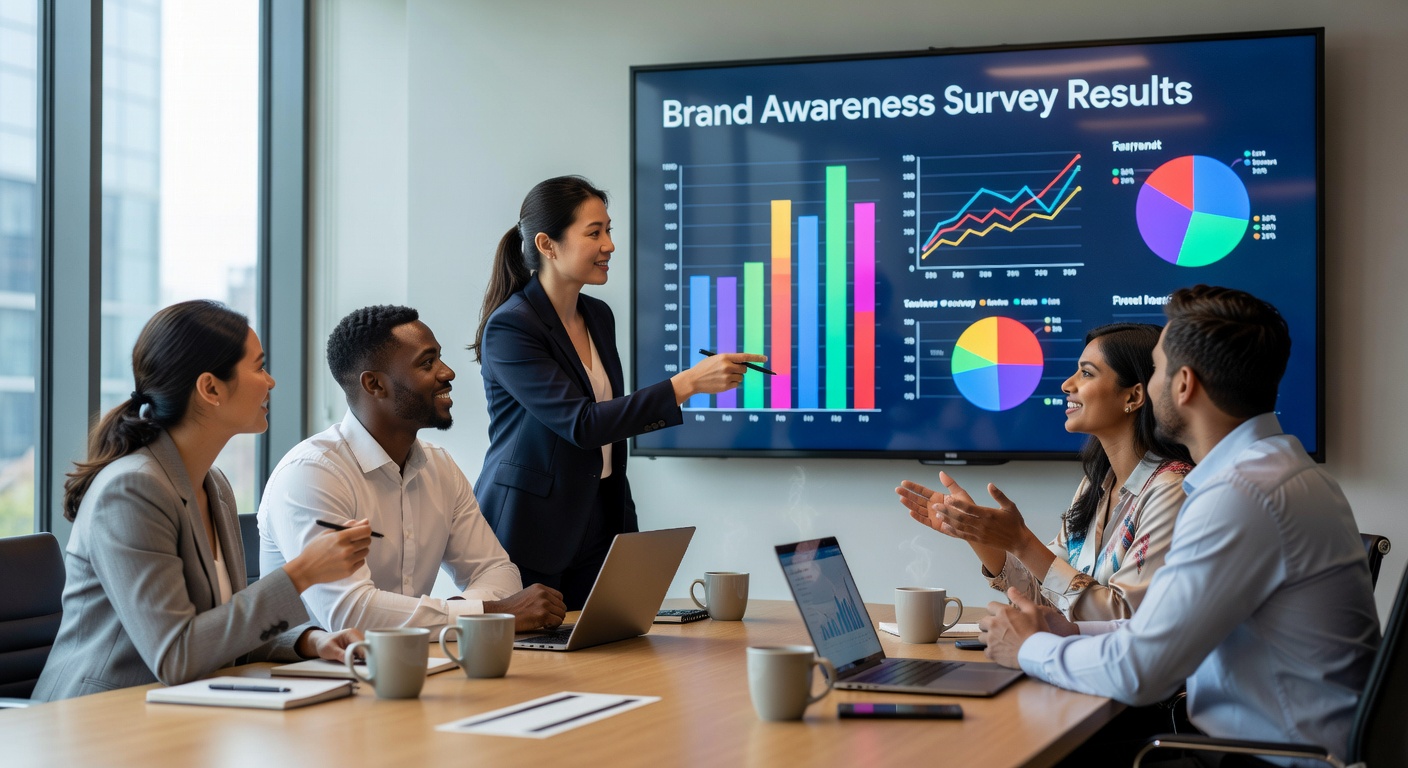
Brand Awareness Survey: Complete Guide to Measuring Success
Discover what a brand awareness survey is, its types, key metrics, and how to create one effectively. Boost your brand's visibility and track marketing ROI with
Ready to Launch Your Free Survey?
Create a modern, high-conversion survey flow with Spaceforms. One-question-per-page, beautiful themes, and instant insights.
What Is a Brand Awareness Survey?
A brand awareness survey is a research tool that measures how well people recognize and remember your brand. It helps you understand whether your target audience knows who you are, what you offer, and how you compare to competitors. These surveys provide concrete data about your brand's visibility in the marketplace.
Unlike general customer satisfaction surveys, brand awareness surveys focus specifically on recognition and recall. They reveal gaps in your marketing reach and show which channels are actually working. The insights help you allocate marketing budgets more effectively and identify opportunities for growth.
Definition and Purpose
Brand awareness surveys quantify how familiar consumers are with your brand name, logo, products, or services. The primary purpose is to establish a baseline for marketing performance and track improvement over time. These surveys answer critical questions: Do people know you exist? Can they recall your brand without prompting? What do they associate with your company?
Businesses use these surveys before launching new campaigns, after rebranding efforts, or when entering new markets. The data guides strategic decisions about messaging, positioning, and advertising spend.
Types of Brand Awareness Measured
Brand awareness surveys typically measure two distinct types of awareness. Unaided awareness (also called spontaneous recall) asks respondents to name brands in a category without any hints. This reveals top-of-mind positioning. Aided awareness provides prompts like logos or brand names and asks if respondents recognize them.
A third type, brand recall, tests whether people can remember your brand after being exposed to your advertising or messaging. Understanding all three types gives you a complete picture of your market presence.
Key Metrics to Track
The most important metrics in a brand awareness survey include:
- Recognition rate: Percentage of respondents who recognize your brand when shown visual or verbal cues
- Recall rate: Percentage who can name your brand without prompting
- Top-of-mind awareness: Percentage who mention your brand first in their category
- Brand association: Attributes and values people connect with your brand
- Share of voice: How often your brand is mentioned compared to competitors
Why Conduct a Brand Awareness Survey?
Running a brand awareness survey gives you hard numbers instead of guesswork. You'll know exactly where you stand in your market and can prove marketing ROI to stakeholders. This data-driven approach eliminates the risk of investing in campaigns that don't reach your audience.
Benefits for Marketers and Businesses
Brand awareness surveys deliver measurable insights that improve marketing effectiveness. They reveal which demographics know your brand and which remain untapped markets. You can identify messaging that resonates and spot confusion about your offerings before it damages sales.
For small businesses and startups, these surveys validate whether early marketing efforts are working. For established brands, they track whether awareness is growing or declining. Either way, you gain actionable intelligence to optimize your strategy.
Common Use Cases Across Industries
Retail companies use brand awareness surveys to measure the impact of seasonal campaigns and store openings. Technology startups track awareness growth as they scale from early adopters to mainstream markets. Healthcare providers assess community recognition after mergers or service expansions.
Educational institutions measure awareness among prospective students and their families. Non-profits gauge recognition to improve fundraising efforts. The versatility makes brand awareness surveys valuable across virtually every sector.
Impact on Marketing Strategy
Survey results directly inform where and how you market. Low unaided awareness signals a need for broader reach campaigns. High recognition but low recall suggests messaging problems. Discovering that competitors dominate top-of-mind awareness helps you refine positioning.
The data also justifies budget allocation. When you can prove that specific channels drive awareness, securing resources becomes easier. Marketing teams shift from defending budgets to demonstrating measurable growth.
How to Design an Effective Brand Awareness Survey
A well-designed brand awareness survey balances comprehensive data collection with respondent convenience. Keep surveys short—typically 5-10 questions—to maintain high completion rates. Start with broader questions and narrow down to specifics to avoid biasing responses.
Essential Questions to Include
Begin with unaided questions to capture pure recall: "Which brands come to mind when you think of [product category]?" Follow with aided questions showing your logo or name: "Are you familiar with [Brand Name]?"
Include questions about:
- How respondents first heard about your brand
- What products or services they associate with you
- Whether they've purchased from or engaged with your brand
- How they perceive your brand compared to competitors
- Demographic information to segment results
Best Practices for Survey Structure
Order matters significantly in brand awareness surveys. Always ask unaided recall questions before showing any brand names or logos. This prevents contaminating spontaneous awareness data with prompted recognition.
Use a mix of question types—multiple choice for recognition, open-ended for recall, and rating scales for perception. Design for mobile devices since most responses now come from smartphones. Tools like SpaceForms automatically optimize surveys for any screen size without extra configuration.
Avoiding Common Pitfalls
Don't lead respondents with overly specific questions or examples that include your brand name too early. Avoid survey fatigue by limiting to 10 questions maximum. Skip complex matrix questions that confuse mobile users.
Never survey only existing customers if you want true brand awareness data—you need responses from your total addressable market. Biased sampling produces misleading results that damage decision-making.
Tools and Platforms for Building Brand Awareness Surveys
The right survey tool makes the difference between actionable insights and abandoned forms. Modern platforms eliminate technical barriers so anyone can create professional surveys in minutes. The best options combine ease of use with powerful features like logic branching and analytics.
Overview of Popular Options
Several platforms dominate the survey space. SurveyMonkey offers extensive templates but requires paid plans for many features. Typeform provides beautiful interfaces but limits free users to 10 responses per month. Google Forms is free but lacks advanced analytics and customization.
SpaceForms stands out by offering unlimited responses forever at no cost, with AI-powered survey creation that builds professional forms from simple prompts. You can launch a brand awareness survey without signing up or entering payment details.
Features of Modern Form Builders
| Feature | Why It Matters |
|---|---|
| Drag-and-drop editor | Build surveys in minutes without technical skills |
| Logic branching | Show relevant questions based on previous answers |
| Mobile optimization | Capture responses from smartphones and tablets |
| Real-time analytics | Monitor results as they arrive without exports |
| Custom branding | Maintain brand consistency throughout the survey |
| AI assistance | Generate question sets from simple descriptions |
Choosing the Right Tool for Your Needs
Consider your budget, technical expertise, and response volume when selecting a platform. Free tools work perfectly for small businesses and periodic surveys. If you need advanced features like custom domains or API access, evaluate whether paid tiers justify the cost.
For teams just starting with brand awareness research, platforms offering templates and pre-built questions accelerate deployment. Look for tools that don't limit responses—running out of quota mid-campaign wastes money and loses valuable data.
Analyzing and Acting on Survey Results
Collecting responses is only half the battle. The real value emerges when you transform raw data into strategic actions. Start analysis by segmenting results by demographics, geography, or customer status to identify patterns.
Interpreting Responses
Calculate your unaided and aided awareness rates first—these become your baseline metrics. Look for gaps between recognition and recall; high recognition with low recall suggests you need stronger messaging or more consistent presence.
Analyze open-ended responses for themes about what people associate with your brand. Unexpected associations might reveal positioning problems or opportunities. Compare awareness rates across age groups, locations, or income levels to find underserved segments.
Benchmarking Against Competitors
Include competitor brands in your aided awareness questions to understand relative positioning. If competitors consistently rank higher in top-of-mind awareness, investigate what makes their marketing more memorable.
Track your awareness metrics quarterly or biannually to measure growth. Awareness rarely spikes overnight—sustained campaigns gradually shift these numbers. Document changes alongside marketing activities to connect cause and effect.
Turning Insights Into Action
Low overall awareness demands broader reach campaigns across multiple channels. High awareness in one demographic but not others signals targeting opportunities. Poor brand association quality requires messaging refinement even if recognition is strong.
Create specific action items from each insight. "Awareness low among 25-34 age group" becomes "Launch TikTok campaign targeting millennials." Share results with your entire marketing team so everyone understands current positioning and goals.
Frequently Asked Questions
What is a brand awareness survey?
A brand awareness survey is a questionnaire designed to measure how well your target audience recognizes and remembers your brand. It assesses whether people know your company exists, can recall your name without prompting, and understand what you offer. These surveys provide quantitative data about your market position and help track marketing effectiveness over time.
What are good questions for a brand awareness survey?
Start with unaided questions like "What brands come to mind when you think of [category]?" Then ask aided questions: "Have you heard of [Brand Name]?" Include "Where did you first hear about us?" and "What products/services do you associate with our brand?" Add perception questions like "How would you describe our brand to a friend?" Finish with demographics to segment results properly.
How often should I run a brand awareness survey?
Most businesses should conduct brand awareness surveys quarterly or biannually to track meaningful changes. Monthly surveys are excessive unless you're running major campaigns or operating in rapidly changing markets. Annual surveys work for stable brands with consistent marketing, but you risk missing important shifts. Time surveys around campaign launches or market expansions for maximum insight.
What is the difference between aided and unaided brand awareness?
Unaided awareness measures spontaneous recall—whether people can name your brand without any prompts or hints. Aided awareness tests recognition by showing your logo or mentioning your name, then asking if respondents are familiar with it. Unaided awareness is harder to achieve but more valuable, indicating strong top-of-mind positioning. Aided awareness measures broader market recognition even among those who wouldn't recall you spontaneously.
Can I use free tools for brand awareness surveys?
Yes, several free tools support professional brand awareness surveys. SpaceForms offers unlimited responses forever without requiring payment information, making it ideal for small businesses and frequent surveys. Google Forms is free but lacks advanced features like logic branching. Many paid platforms offer limited free tiers, but response caps can interrupt active surveys, so choose tools that won't restrict your data collection mid-campaign.
How do I analyze brand awareness survey data?
Start by calculating your unaided and aided awareness percentages—these are your key metrics. Segment responses by demographics to identify strong and weak audience segments. Look for patterns in how people describe your brand and what they associate with you. Compare your metrics against competitors included in the survey. Track changes over time rather than fixating on single survey results, as awareness builds gradually through sustained marketing efforts.
What are common mistakes in brand awareness surveys?
The biggest mistake is asking aided questions before unaided ones, which contaminates recall data. Other errors include surveying only existing customers instead of your broader market, making surveys too long (over 10 questions), and using leading questions that bias responses. Many brands also fail to include competitors for benchmarking, skip demographic questions that enable segmentation, or don't run surveys consistently enough to track trends.
How many responses do I need for a valid brand awareness survey?
For small businesses targeting local markets, 100-200 responses provide useful directional insights. Brands serving regional or national markets should aim for 300-500 responses minimum to ensure statistical relevance. If you're segmenting by multiple demographics, increase your target since each segment needs sufficient sample size. Remember that response quality matters more than quantity—targeted surveys of your actual market beat large samples of irrelevant respondents.
Ready to Launch Your Free Survey?
Create a modern, high-conversion survey flow with Spaceforms. One-question-per-page, beautiful themes, and instant insights.