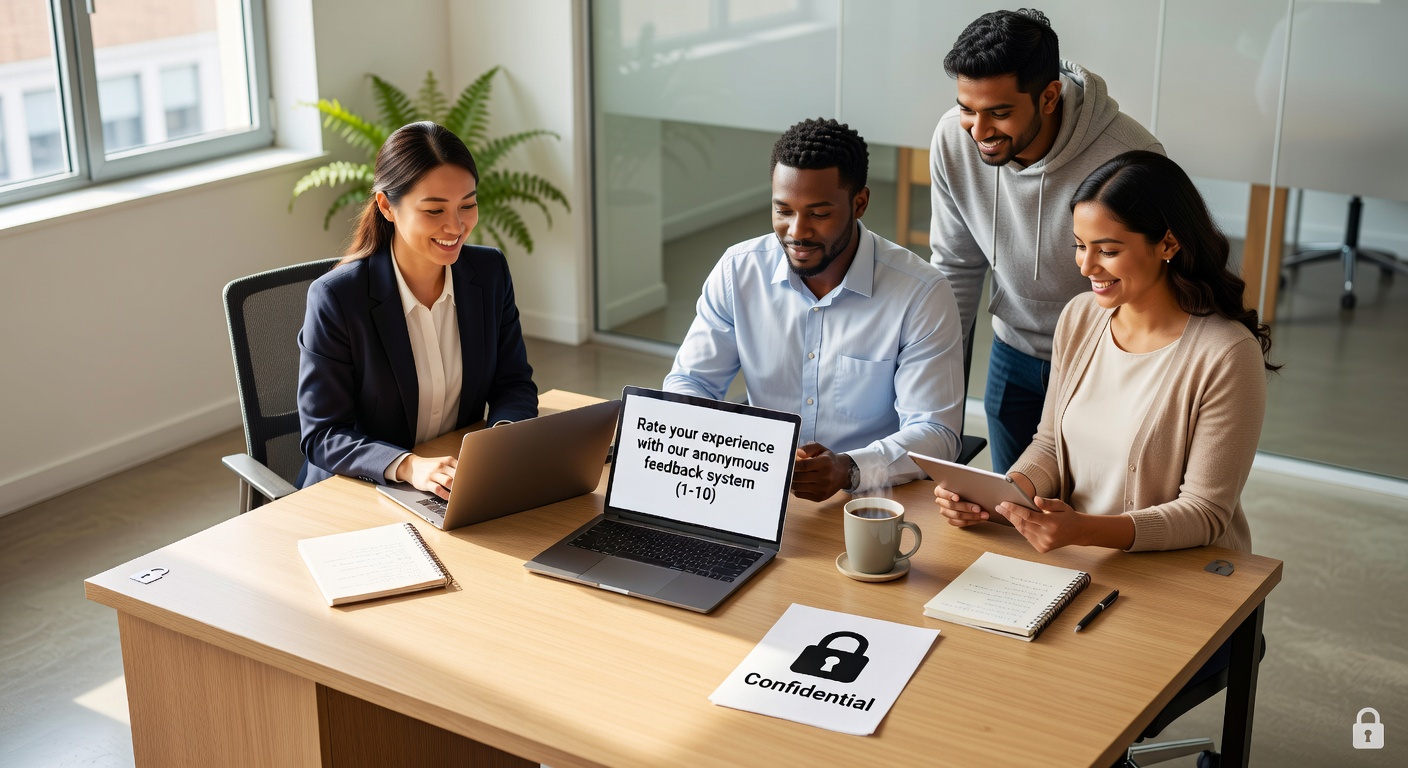
Free Anonymous Survey Maker: Unlimited Responses & Guide
Discover the key benefits of anonymous surveys, including higher response rates and reduced bias for genuine insights. Learn how they boost participation on sen
Ready to Launch Your Free Survey?
Create a modern, high-conversion survey flow with Spaceforms. One-question-per-page, beautiful themes, and instant insights.
Free Anonymous Survey Maker: Benefits & How to Create One
Understanding Anonymous Surveys
Definition and Core Features
Anonymous surveys collect feedback without capturing personally identifiable information from respondents. Unlike standard surveys, they don't track names, email addresses, or IP addresses that could reveal identity. This protection encourages participants to share genuine opinions without fear of consequences.
The core feature is complete disconnection between responses and individual identities. When properly configured, even survey administrators cannot trace answers back to specific people. This creates a safe space for candid feedback on sensitive topics like workplace culture, product complaints, or controversial opinions.
Differences from Non-Anonymous Surveys
Non-anonymous surveys link responses to individuals, enabling follow-up conversations and personalized action. Anonymous surveys sacrifice this traceability for honesty. The trade-off makes sense when you need unfiltered truth more than individual accountability.
Confidential surveys occupy a middle ground—administrators can see who responded but promise not to share identities publicly. True anonymity goes further by making identification technically impossible from the start.
Key Benefits for Honest Feedback
Boosted Response Rates
People participate more freely when anonymity is guaranteed. Research from Pew Research Center shows anonymous surveys often achieve 15-30% higher completion rates compared to identified alternatives. Respondents feel less pressure and more willingness to invest time in thoughtful answers.
This effect multiplies for sensitive topics like salary satisfaction, management effectiveness, or product failures. When stakes feel lower, participation rises naturally. A 2025 PMC literature review on anonymous versus open feedback confirms that anonymous surveys produce greater candor and higher participation rates, especially in hierarchical settings where fear of retaliation runs high.
Reduced Bias and Social Desirability
Social desirability bias causes people to answer how they think they should, not how they truly feel. Anonymous surveys minimize this distortion by removing judgment risk. Employees admit workplace problems more readily. Customers share harsh product criticisms without worrying about being labeled difficult.
The result is data that reflects reality rather than polished perceptions, giving you actionable insights instead of pleasant fiction.
Encouraging Open Employee or Customer Input
Anonymity levels power dynamics. Junior employees critique senior leadership without career concerns. Dissatisfied customers reveal pain points they'd normally suppress to stay polite. This openness surfaces problems early, before they escalate into turnover or churn.
Practical Advantages in Business and Research
Improved Data Quality for Decision-Making
Higher honesty means better decisions. When feedback accurately represents sentiment, you can prioritize initiatives confidently. Anonymous employee surveys might reveal that flexible hours matter more than office perks, redirecting budget to what actually improves retention.
| Survey Type | Response Honesty | Best Use Case |
|---|---|---|
| Anonymous | High | Sensitive topics, culture assessment |
| Confidential | Moderate | Performance reviews, general feedback |
| Identified | Lower | Registration, follow-up required |
Enhanced Trust and Participation in Sensitive Topics
Anonymity builds trust in your feedback process. SHRM research indicates that organizations using anonymous channels see sustained participation over time, while identified surveys experience declining engagement as people lose confidence in safety.
Cost-Effective Insights for Small Teams
Free tools like SpaceForms make anonymous surveys accessible without enterprise budgets. Small businesses gain Fortune 500-level feedback capabilities with unlimited responses and no subscription fees. This democratizes data-driven culture building for teams of any size.
How to Create a Free Anonymous Survey
Step-by-Step Setup with Unlimited Responses
Creating a free anonymous survey takes minutes when you use the right anonymous survey maker. Here's how to build one with SpaceForms—no signup required to start:
- Visit SpaceForms.io and choose "Create Free Survey" or select from pre-built templates
- Enable anonymous mode in survey settings—this automatically disables email collection, IP tracking, and cookies
- Write clear questions that avoid demographic combinations identifying individuals (avoid "What's your exact role + years here + department" in small teams)
- Preview and test with colleagues to ensure no question sequence accidentally reveals identity
- Share your link via email, Slack, or embed—responses flow in with zero traceability
Unlike SurveyMonkey's 25-response free limit or Typeform's 10-response cap, SpaceForms offers unlimited responses forever. This is exactly why many teams searching for free anonymous survey makers discover they can run continuous feedback programs—annual engagement surveys, monthly pulse checks, ongoing customer satisfaction—without hitting paywalls.
Choosing the Right Anonymous Survey Tool
The best free anonymous survey maker balances ease of use, true anonymity features, and response capacity. Look for platforms that encrypt data in transit, comply with GDPR, and clearly document what they do not track. An anonymous survey platform should offer one-click anonymity settings so you don't manually configure dozens of privacy toggles.
SpaceForms stands out as an anonymous survey creator with AI-powered question generation, conversational chat mode, and voice response options—all free. You can learn more about our anonymous survey features and how unlimited free responses support continuous feedback loops that paid tools make prohibitively expensive.
Free Anonymous Survey Makers Compared
SpaceForms vs. SurveyMonkey, Typeform, and Google Forms
When teams evaluate free anonymous surveys, they often compare response limits, anonymity controls, and ease of setup. Here's how leading anonymous survey generators stack up in 2026:
| Platform | Free Tier Responses | True Anonymity | AI Features | Best For |
|---|---|---|---|---|
| SpaceForms | Unlimited | Yes (one-click mode) | AI builder, voice mode | Continuous feedback, no caps |
| SurveyMonkey | 25 per survey | Requires paid plan | Limited | Small one-time surveys |
| Typeform | 10 per month | Basic (no IP block on free) | None on free | Branded, design-focused |
| Google Forms | Unlimited | Manual config needed | None | Basic surveys, Google users |
According to Zapier's 2025 roundup of best free survey tools, Google Forms offers completely free unlimited responses but lacks AI features and advanced anonymity controls compared with dedicated platforms. For serious anonymous feedback programs—employee engagement, sensitive research, ongoing customer satisfaction—an anonymous survey tool like SpaceForms removes response anxiety and budget constraints simultaneously.
The free survey maker anonymous teams choose depends on scale. If you need one quick poll with under 25 responses, SurveyMonkey works. For sustained programs where hundreds or thousands of respondents share sensitive feedback, unlimited free anonymous surveys become non-negotiable.
Real-World Applications and Examples
HR and Employee Satisfaction
Annual engagement surveys work best anonymously. Employees honestly rate managers, flag harassment concerns, and suggest improvements without retaliation fears. HR teams spot department-specific issues and measure culture change over time using employee engagement templates.
Market Research and Customer Feedback
Product teams use anonymous surveys to uncover true usage patterns and pain points. Customers admit they don't use features, find interfaces confusing, or prefer competitors—feedback they'd soften in non-anonymous contexts. This honesty accelerates product-market fit.
Educational and Community Surveys
Students evaluate teaching quality more honestly when anonymity protects them from grade retaliation. Community organizations gauge resident concerns without political positioning affecting responses. The pattern holds everywhere: anonymity unlocks truth.
Best Practices for Implementation
Ensuring True Anonymity
Turn off email collection, IP logging, and tracking cookies. Communicate these protections explicitly in survey introductions. Avoid questions that inadvertently identify people, like "What's your role?" in a three-person department.
Tools and Features to Leverage
Modern survey builders like SpaceForms offer one-click anonymous mode that handles technical details automatically. Look for GDPR compliance, encrypted data transmission, and clear privacy policies. The platform's free tier includes unlimited anonymous responses, making it ideal for ongoing feedback programs.
Common Pitfalls to Avoid
Don't promise anonymity then ask for emails. Avoid over-surveying, which breeds skepticism about how feedback is used. Most critically, act on results visibly. If anonymous surveys reveal problems but nothing changes, trust evaporates and future response rates plummet.
- Never combine anonymous surveys with mandatory sign-ins
- Don't use third-party tracking scripts that log visitor data
- Avoid excessively detailed demographic questions
- Always close the feedback loop by sharing what changed
Frequently Asked Questions
What makes a survey truly anonymous?
A truly anonymous survey collects no identifying information whatsoever. This means no email addresses, IP logging, cookies, or demographic combinations that could pinpoint individuals. The technical configuration prevents even administrators from connecting responses to people. Clear communication about these protections at survey start builds respondent confidence.
Do anonymous surveys always get more honest responses?
Anonymous surveys typically increase honesty, especially for sensitive topics, but context matters. If organizational trust is already high, the anonymity benefit shrinks. However, research from the American Psychological Association consistently shows reduced social desirability bias in anonymous formats. The effect is strongest when discussing management, compensation, or controversial opinions.
How can anonymous surveys help small businesses?
Small businesses benefit enormously because team size makes identification easier, increasing response hesitancy. Anonymous surveys let small teams surface honest concerns about direction, culture, and leadership without political complications. Free tools eliminate cost barriers, making professional feedback systems accessible to startups and local businesses.
Are there privacy risks with online anonymous surveys?
Reputable platforms minimize risks through encryption and data protection standards. Choose tools that comply with GDPR and don't sell data to third parties. The main risk comes from poorly configured surveys that claim anonymity but still log IPs or require accounts. Always verify the platform's privacy policy and technical anonymity features before launching sensitive surveys.
What's the difference between anonymous and confidential surveys?
Confidential surveys know who responded but promise not to share identities publicly. Administrators can see names linked to answers, enabling follow-up. Anonymous surveys make identification impossible—no one can connect responses to individuals, even internally. Choose confidential when you need follow-up capability, anonymous when you need maximum honesty on sensitive topics.
Can anonymous surveys improve employee engagement?
Yes, when implemented correctly. Anonymous feedback channels show employees their voices matter without personal risk. This psychological safety increases participation and investment in organizational improvement. The key is demonstrating that feedback drives real changes, creating a virtuous cycle of trust and engagement.
How to set up an anonymous survey for free?
Use a platform like SpaceForms that offers free anonymous surveys with unlimited responses. Enable anonymous mode in settings, which automatically disables IP tracking and email collection. Write clear questions, avoid identifying demographic combinations, and communicate privacy protections upfront. Most setups take under 10 minutes from template to launch.
What is the best free anonymous survey maker?
The best free anonymous survey maker depends on your needs. SpaceForms leads for unlimited responses, AI-powered question building, and conversational modes—all permanently free. Google Forms works if you already use Google Workspace and can manually configure anonymity. SurveyMonkey and Typeform limit free responses to 25 and 10 respectively, making them unsuitable for larger feedback programs without paid upgrades.
How do I create a free anonymous survey?
Start with an anonymous survey creator like SpaceForms. Select a template or build from scratch, enable anonymous mode to block tracking, write questions that avoid identifying combinations, and share your link. The entire process takes minutes, requires no account to try, and supports unlimited responses—perfect for continuous employee or customer feedback.
Are anonymous surveys truly anonymous?
They are when properly configured. A genuine anonymous survey tool disables email capture, IP logging, cookies, and browser fingerprinting. Verify your platform's privacy documentation and test with colleagues. If you can't link a response to a person even as administrator, your survey is truly anonymous. Platforms that claim anonymity but require login or track metadata fail this test.
Ready to Launch Your Free Survey?
Create a modern, high-conversion survey flow with Spaceforms. One-question-per-page, beautiful themes, and instant insights.